Please hand in all your location work by Tuesday 18th December.
If you are shooting digital your work should be handed in on CD as high res JPEGs.
All photographs should be captioned in the IPTC envelope.
Please also hand in a printed out sheet of thumbnails.
If you are shooting film your pictures should be numbered and corresponding captions printed out and handed in too.
Remember that it is a minimum of 20 pictures.
Remember to record all your research in your workbook.
Monday, November 26, 2007


Tuesday, November 20, 2007
Calibration

Follow this link to Photobox.co.uk
This screen image should match the print I've given everyone - adjust your own monitor if it doesn't
Monday, November 19, 2007
Colour (not color)

Wikipedia on colour photography
That Russian bloke who invented colour photography in 1905
(The Scots invented everything)
William Eggleston's innovative colour work was promoted at MOMA in 1976 by John Szarkowski, keen to repeat his late sixties successes with Winogrand and Freidlander

William Eggleston - Masters of Photography link
William Eggleston.com
Influenced heavily by the 'epic' photography in The Family of Man exhibition in 1955, Irish businessman John Hinde (an ex Circus performer - a showman at heart) achieved great commercial success with extraordinary, saturated colour postcards - intended to match peoples' memory of their holiday - not the stark, austere post-war reality
John Hinde's Butlins postcards

Tony Ray Jones died from Leukaemia in 1972 at the age of 31 - which is why so few people have heard of him

Martin Parr blog (please read this)
Martin Parr audio interview
More Parr

New Brighton - the seaside town featured in Parr's 'The last resort'
Umberto Eco published a very important book of collected writings in 1985, called 'Travels in Hyper-reality'. Eco discusses the media and the messages they send - and we receive. He's particularly interested in the idea of 'simulated reality' - theme parks, Disneyland and the madness of Las Vegas. Please follow this link and read a synopsis of his thoughts.

Tuesday, November 13, 2007
Digital Imaging – Stationary Assignment Hand in.
A very big thank you to everyone who worked really hard to get their work in on time! There is some great stuff being produced… and I am very pleased to say that at the moment, this group seems to understand the importance of dealines.
For the people who did not hand in on time, you are looking at a fail unless this work is on my desk before this Friday. You work will be peer assessed by Group B next week
There will be a late hand in box on my desk, please sign your work it in and put it in the box. Please make sure everything is packaged up neatly and that all parts are attached to one another. Anything not packaged or not sign in, that goes missing is your responsibility.
Currently in the hall of shame, and running the risk of failing this unit we have:
Amanda Connolly
Ryan Miller
If you have had genuine extenuating circumstances that may prevented you completing the assignment, please inform me (on a Monday or Tuesday) or Matthew ASAP.
Please remember that attendance to the peer assessment exercise next Tuesday the 20th of November is compulsory for all students to attend.
Monday, November 12, 2007
Work in Progress Meeting - Monday 26th Nov
Please bring two finished pieces of work from the Constructed Image workshop assignments:
Hotel menu
Weston
Autumn
City
Infra-Red
Room 187, Monday 26th 1.15pm
Zone assignment deadline Monday 19th, Room 187 1.15pm
Ruler + practical application prints
Hotel menu
Weston
Autumn
City
Infra-Red
Room 187, Monday 26th 1.15pm
Zone assignment deadline Monday 19th, Room 187 1.15pm
Ruler + practical application prints


Thursday, November 8, 2007
Tutorials: Monday 12th Nov - Room 187
Please bring your workbook:
2.30pm Louise Munro
2.45pm Amanda Connelly
3.00pm Natalie Sangster
3.15pm Anja Mroczkowska
2.30pm Louise Munro
2.45pm Amanda Connelly
3.00pm Natalie Sangster
3.15pm Anja Mroczkowska
Monday, November 5, 2007
CTS - Monday lecture programme
12th Nov: History 4 - Robert Frank
19th Nov: History 5 - Colour
26th Nov: Medium is the message
3rd Dec: History 6 - New directions
10th Dec: Presentation skills
17th Dec: No lecture
19th Nov: History 5 - Colour
26th Nov: Medium is the message
3rd Dec: History 6 - New directions
10th Dec: Presentation skills
17th Dec: No lecture
Friday, November 2, 2007
Stock - Parliament visit: Tues 6th Nov
Can we all meet outside the public entrance of the Scottish Parliament on Horse Wynd at 12 noon, on Tuesday 6th November
Tuesday, October 30, 2007
Stieglitz or Steichen?
In a history of the twentieth century - who had the greater influence on the direction of modern photography?

Alfred Stieglitz or Edward Steichen ?
Make your case with approx 1,000 words
Submission: Monday 12th November - 12 noon: lecture theatre 1
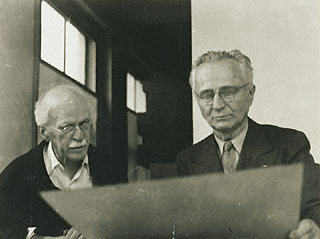
Alfred Stieglitz or Edward Steichen ?
Make your case with approx 1,000 words
Submission: Monday 12th November - 12 noon: lecture theatre 1
History part 3: Modernism & Propaganda

We covered a lot of ground in this lecture:
Documentary projects used the veracity of photography to publicise and inform:
Mass Observation - UK documentary project 1937 - 1953
Farm Security Admistration - massive US project
Florence Thomson - the "Migrant Mother"
Walker Evans - the Robbie Williams of the FSA
August Sander - Faces of the Twentieth Century (before the Nazis put him in prison)

Wikipedia on Propaganda
Nazi propaganda
Some images have become iconic:

Joe Rosenthal's picture at Iwo Jima
Associated Press counter accusations of fakery
Flags of our Fathers - Hollywood movie with a twist
Team America World Police
William Eugene Smith perhaps the World's greatest photographer

Minamata - Smith never fully recovered from being beaten up while trying to photograph the plight of a Japanese fishing vilage being poisoned by an untouchable and unaccountable chemical industry in the 1970s
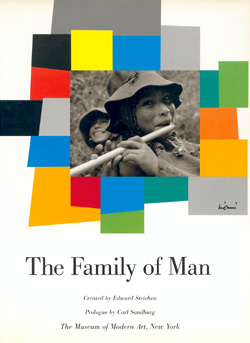
The Family of Man exhibition in 1955 (curated by Edward Steichen)
Monday, October 29, 2007
Tuesday, October 23, 2007
Wednesday - Studio
I have some lighting techniques to demonstrate tomorrow morning - the afternoon will be free for anyone who wants to shoot in Studio 22 - or ask questions.
Monday, October 22, 2007
Zone
This is a Zone ruler of 'reflected light luminosity':

John Blakemore describes each Zone like this:
Zone 0 Featureless black
Zone I Very dark black - no detail
Zone II First sense of separation in dark areas but no detail
Zone III Clear detail in darkest areas
Zone IV Dark hair, shadow in landscape
Zone V Mid-tone (18%) grey, tanned skin, grass or stone
Zone VI Caucasian skin
Zone VII Whites retaining full detail, skin in sunshine
Zone VIII Bright surfaces, whites with little texture left
Zone IX Glaring surfaces, highlights without detail

John doesn't bother with Zone 0 and neither will we
John's Zone book

The Zone system on Wikipedia
The Zone system explained by American nerds
You can take a reflected light reading off anything - if you can visualise what "Zone" it is, and adjust your exposure setting accordingly. I'll explain more soon.
For next Monday, please try to shoot the negatives for a Zone ruler: four stops over and four stops under a Zone V (grey card exposure) of an evenly illuminated, textured surface. You should have 9 frames of increasing density.
(Remember... it won't go wrong if you follow the instructions...)

John Blakemore describes each Zone like this:
Zone 0 Featureless black
Zone I Very dark black - no detail
Zone II First sense of separation in dark areas but no detail
Zone III Clear detail in darkest areas
Zone IV Dark hair, shadow in landscape
Zone V Mid-tone (18%) grey, tanned skin, grass or stone
Zone VI Caucasian skin
Zone VII Whites retaining full detail, skin in sunshine
Zone VIII Bright surfaces, whites with little texture left
Zone IX Glaring surfaces, highlights without detail

John doesn't bother with Zone 0 and neither will we
John's Zone book

The Zone system on Wikipedia
The Zone system explained by American nerds
You can take a reflected light reading off anything - if you can visualise what "Zone" it is, and adjust your exposure setting accordingly. I'll explain more soon.
For next Monday, please try to shoot the negatives for a Zone ruler: four stops over and four stops under a Zone V (grey card exposure) of an evenly illuminated, textured surface. You should have 9 frames of increasing density.
(Remember... it won't go wrong if you follow the instructions...)
Naked vs Nude
Manet's Olympia

This is an enormous subject - worthy of a whole semester to itself. It's impossible to give a complete and balanced overview, but here are a few ideas and links. Please make some notes in your workbook.
Joel-Peter Witkin

Wikipedia on JPW
JPW gallery
8mm
Lois Greenfield

John Berger Notes on 'The Gaze' from "Ways of seeing"
Sally Mann

Laura Mulvey biography
BW information
This is Kodak Tri-X

Not to be confused with the much newer (and turbo-charged) T-MAX films 100, 400 and 3200 ISO
Here are some of the links to the areas I skirted over:
Silverprint - the best materials retailer (and genuine advice)
Ilford photo click on 'products'
Fuji pro - links to film info pdf + data guide
Kodak pro
Kodak B/W films
Kentmere - excellent papers
Fotospeed - excellent too + lith material specialist
Modern films are brilliant. T-Max 100 & 400 are amazing - but it gets expensive if you use T-Max developer everytime (which you should, or else there's not much point). So, age-old Tri-X in cheap D76 actually works really well if your follow this recipe...
Kodak Tri-X 400 - rated @ 200ISO
Dev 8 mins in D76 1dev+1water @ 20deg C
(Rating Tri-X at 200 ISO deliberately lets more light in, which saturates the silver halide crystals, reducing their size. Cutting the development to 8 mins - a little less than Kodak recommend - compensates for what would otherwise be overexposure)
Also:
Kodak T-Max 3200 - rated @ 1600ISO
Dev 9 mins in T-Max dev 1dev+4water @ 20deg C
(The same grain-calming technique works here too)
Friday, October 12, 2007
Soup in their eyes
Perhaps you might want to vote for your favourite...
Post a comment
Give someone the gift of feedback
Don't be shy... you know you want to
(See you all on Monday 22nd)
Post a comment
Give someone the gift of feedback
Don't be shy... you know you want to
(See you all on Monday 22nd)
Subscribe to:
Posts (Atom)